


A single step at the front door, a raised lip at the patio slider, or a porch with a few stairs can turn an ordinary trip outside into a daily obstacle. If you or someone you care for uses a wheelchair or mobility scooter, the right ramp removes that obstacle and gives back a little independence every time the door opens. The good news is that most home entries can be solved with one of a few straightforward ramp types.
Quick Answer: Threshold ramps handle doorway lips and single small steps, and portable folding ramps cover a few steps and travel to places that are not set up for you yet. Curb ramps bridge curbs and driveway edges, while modular wheelchair ramp systems are built for porches and everyday home use where you need a permanent, gentle slope. If you are not sure which fits, measure the rise first and the answer usually becomes clear.
This guide was reviewed by the Independent Living Superstore team, a veteran-owned homecare equipment retailer.
Who Wheelchair Ramps Are For
Wheelchair ramps for home use help anyone who finds a step, lip or curb hard to cross on wheels or on foot. They are a good fit for:
- Wheelchair and mobility scooter users getting in and out of their own home
- Caregivers and family members who help with daily entry and exit
- Visitors with limited mobility who come to your home for a holiday or a weekend
- Rollator and walker users who struggle with small transitions such as door thresholds and patio tracks
Types of Wheelchair Ramps

The main types of wheelchair ramps differ by how much rise they cover and whether they stay put or travel with you. This table gives you the short version before we walk through each one.
| Type | Best For | Typical Rise | Key Feature |
| Threshold ramp | Doorway lips, sliding door tracks, one small step | Small lips; rubber models on our shelves cover up to a 4-inch rise | Sits in place at the doorway; aluminum or rubber |
| Portable folding ramp | A few steps, van or car access, travel | Depends on length; our folding line runs from 2 to 10 feet | Folds for the trunk; non-slip aluminum, 800-pound capacity |
| Curb ramp | Curbs, driveway edges, garage lips | Rubber models in 2.6-inch and 6-inch rise | Heavy rubber or aluminum that stays put outdoors |
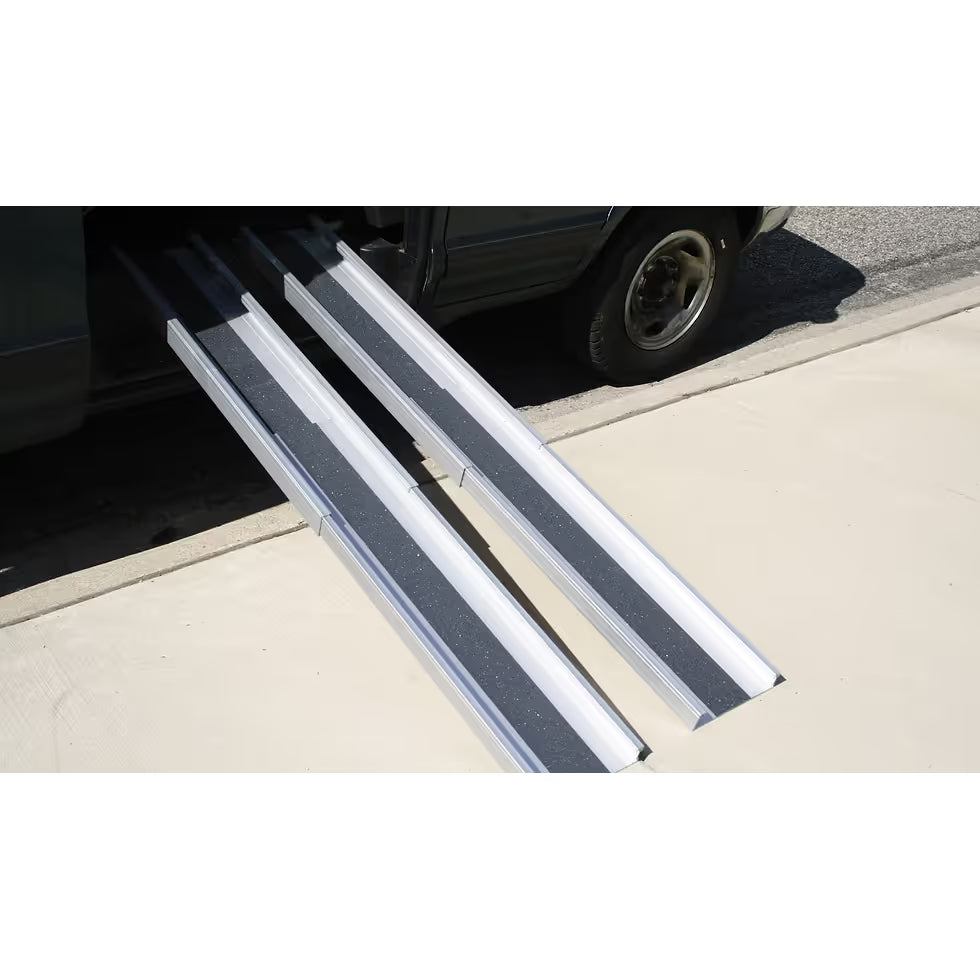
| Telescoping channel ramp | Steps and vehicle loading where you need adjustable length | Adjusts to the setting; see the product page | Two channels that extend and collapse for storage |
| Modular ramp system | Porches, multi-step entries, everyday home use | Configured to your home's total rise | Sections, platforms and handrails quoted to your entry |
Threshold Ramps
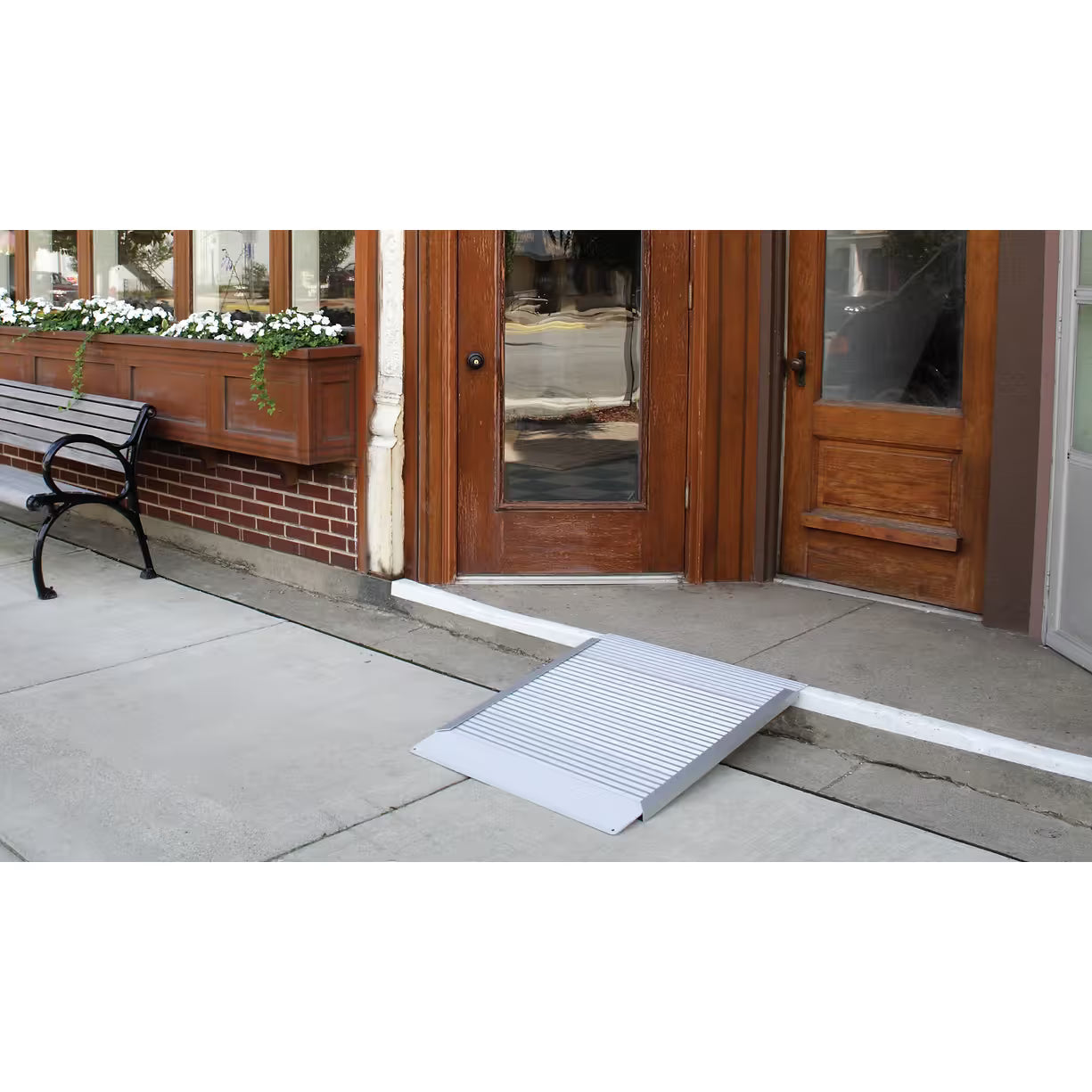
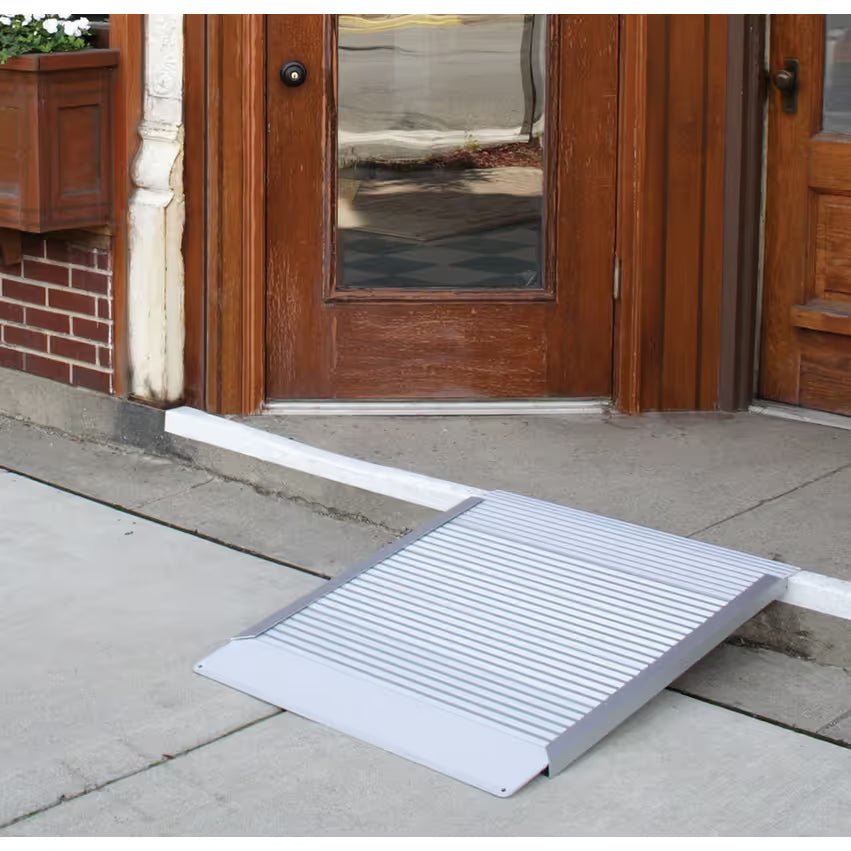
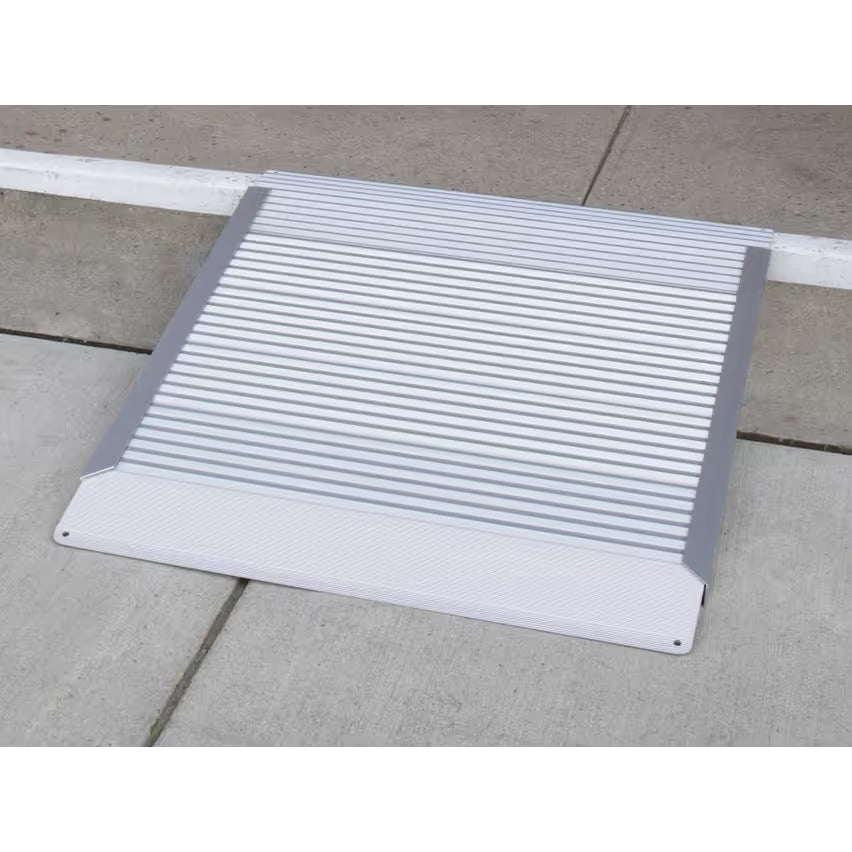
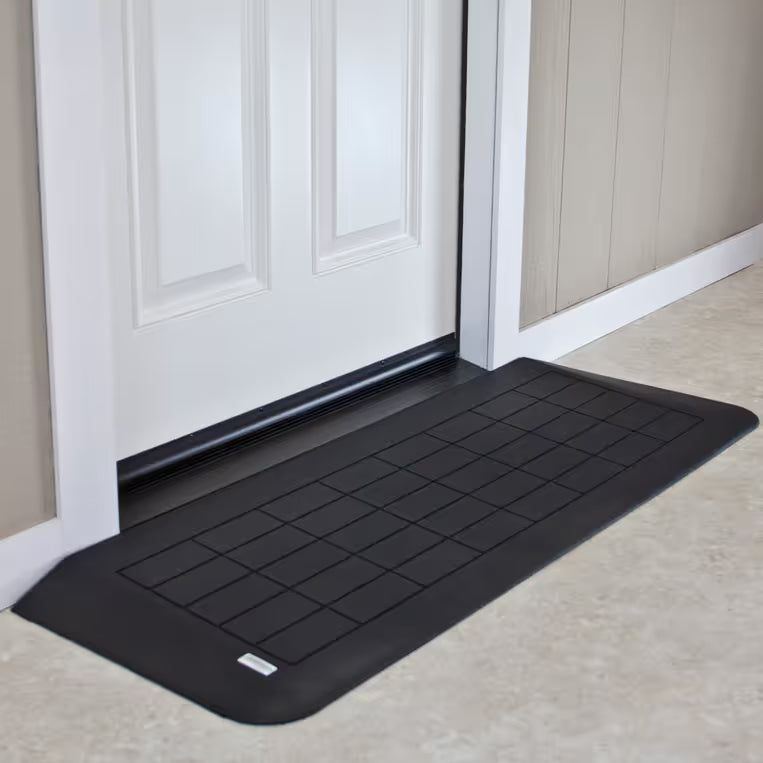
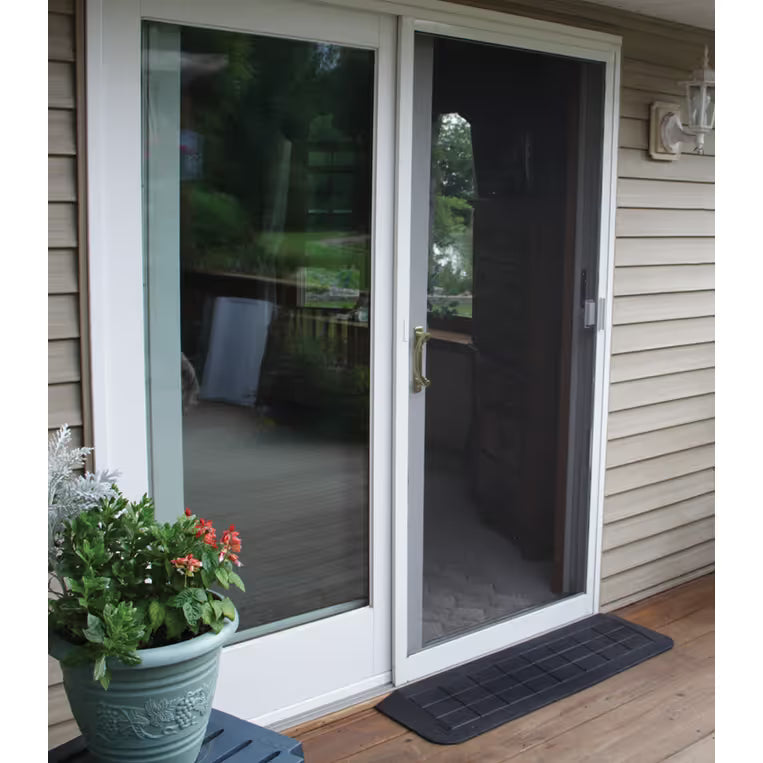
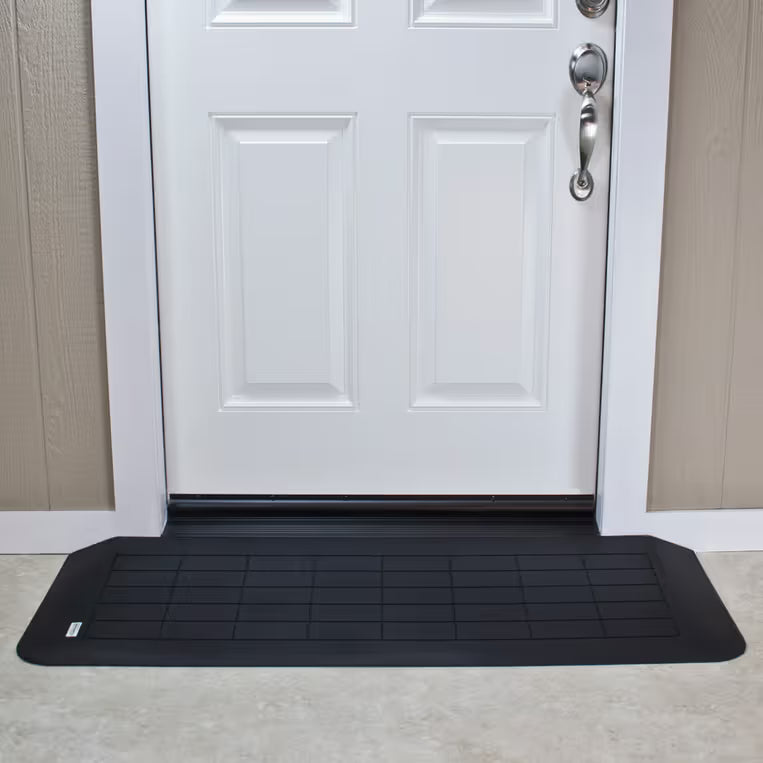
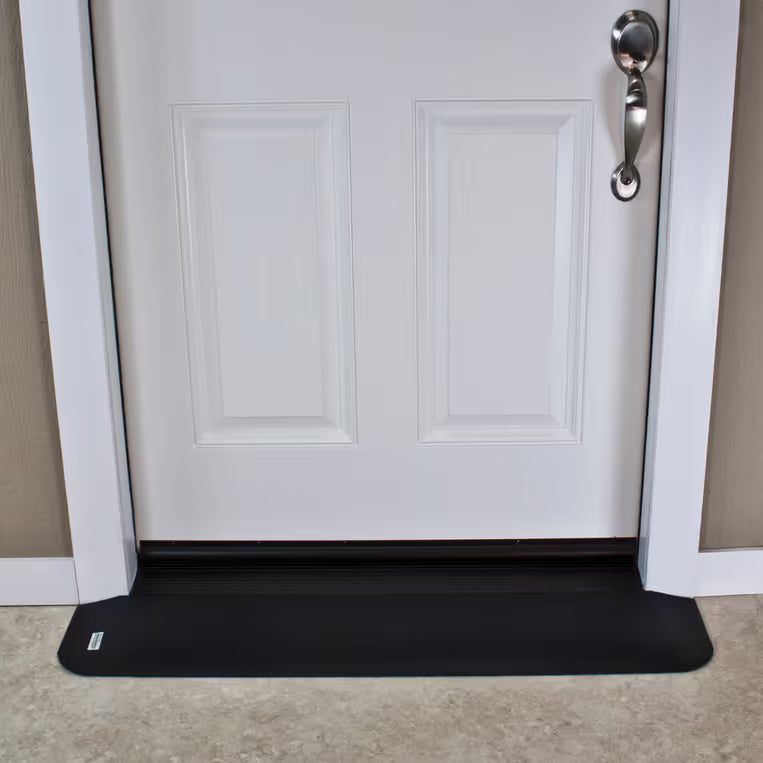
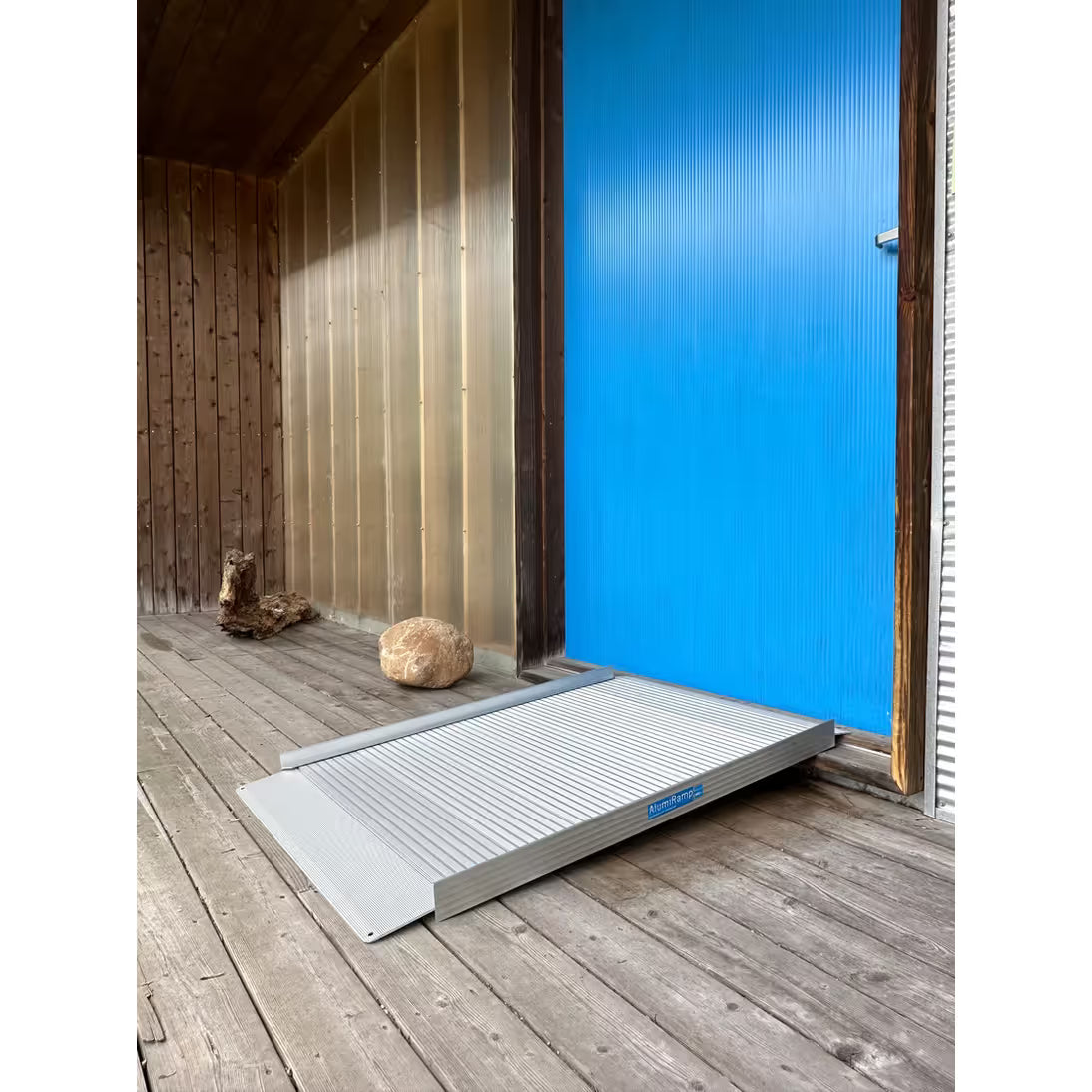
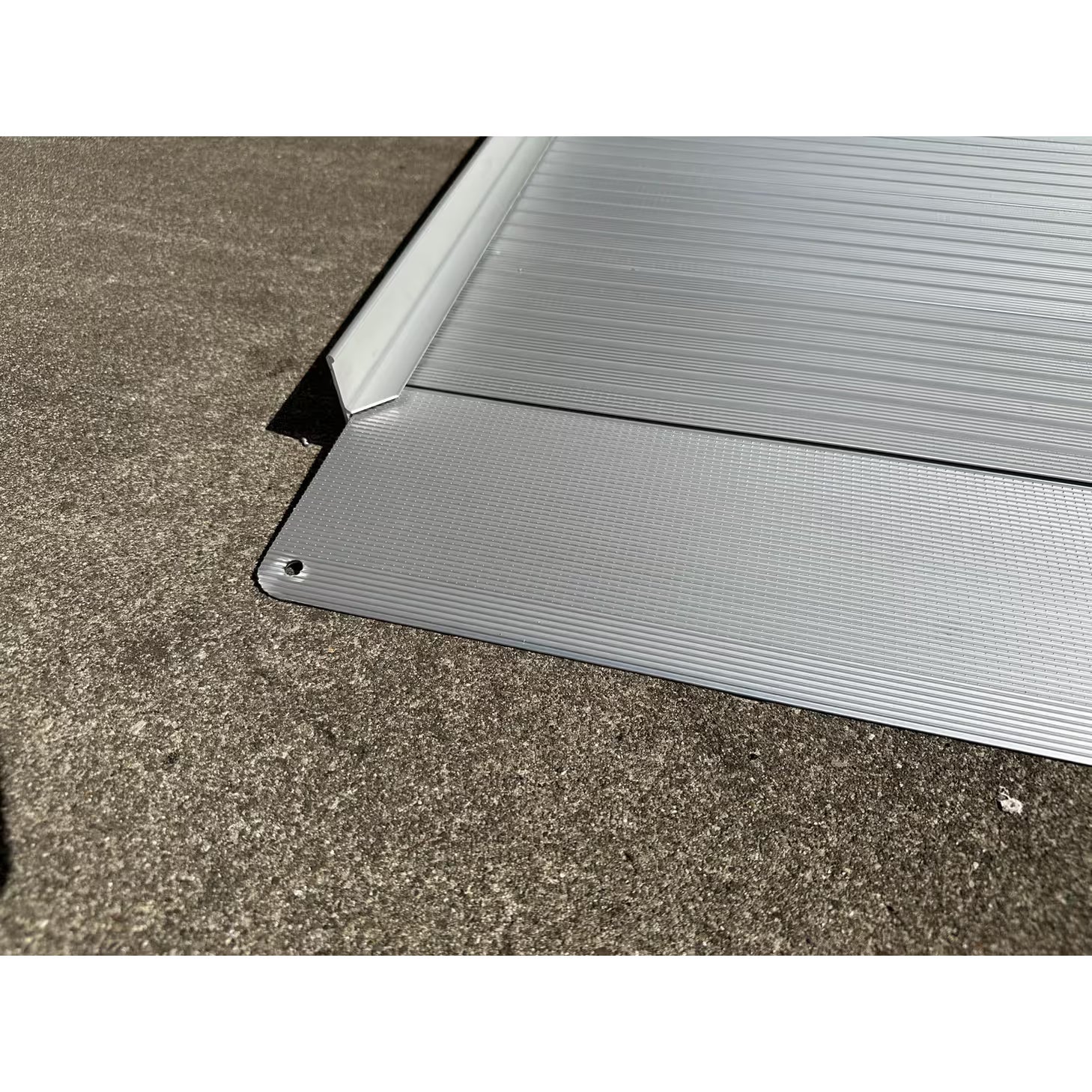
A threshold ramp is the simplest fix for the most common problem: a raised lip at a doorway. Front doors, patio sliders and the step down into a garage often have a small ridge that stops a wheelchair or scooter cold, even though it is only an inch or two high. A rubber threshold ramp or a low aluminum wedge turns that ridge into a smooth transition.
These ramps work well indoors and out because they are compact and stay where you put them. Rubber versions are heavy enough to hold their place and are gentle on floors, while aluminum versions are lighter to move if you want to use one ramp at more than one door. Caregivers like them because there is nothing to set up each day; once it is in place, it just works.
Good places to start are the Alumiramp Aluminum Threshold Ramp, the Alumiramp Rubber Threshold Ramp, and the Access4U STR Series Supported Threshold Ramp. For a taller lip, we also carry a 4-inch rise rubber threshold ramp rated for 2,200 pounds.
Portable Wheelchair Ramps
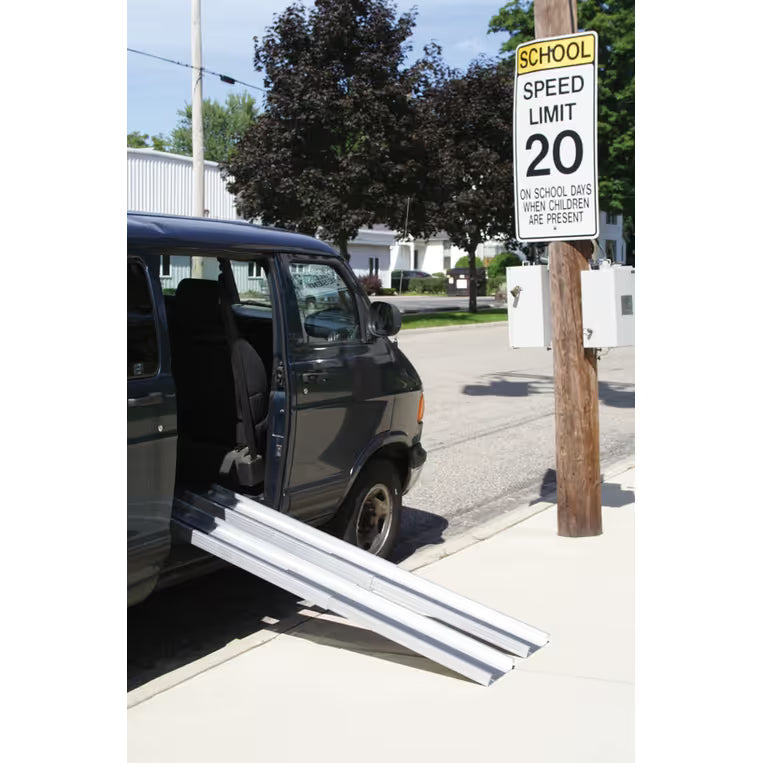
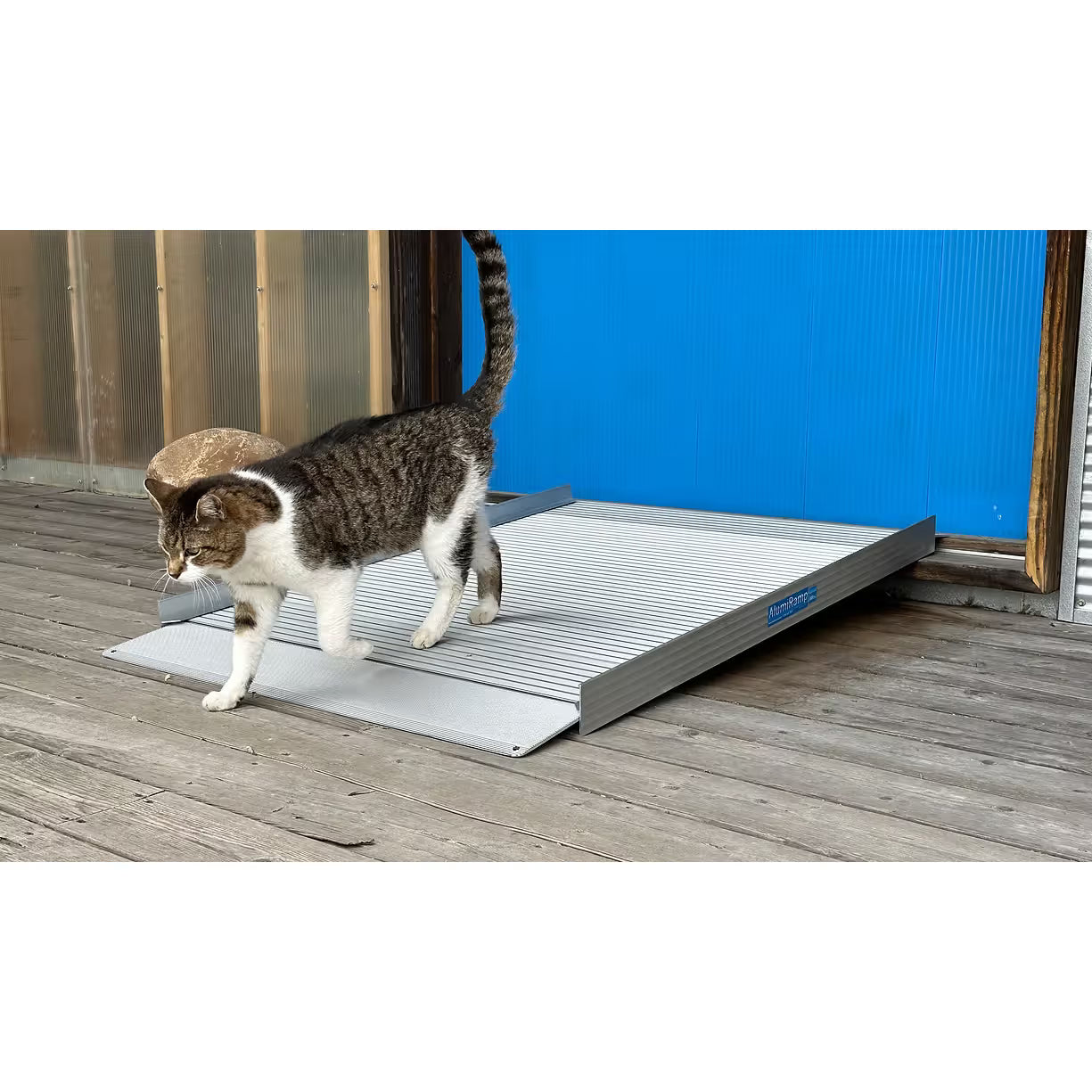
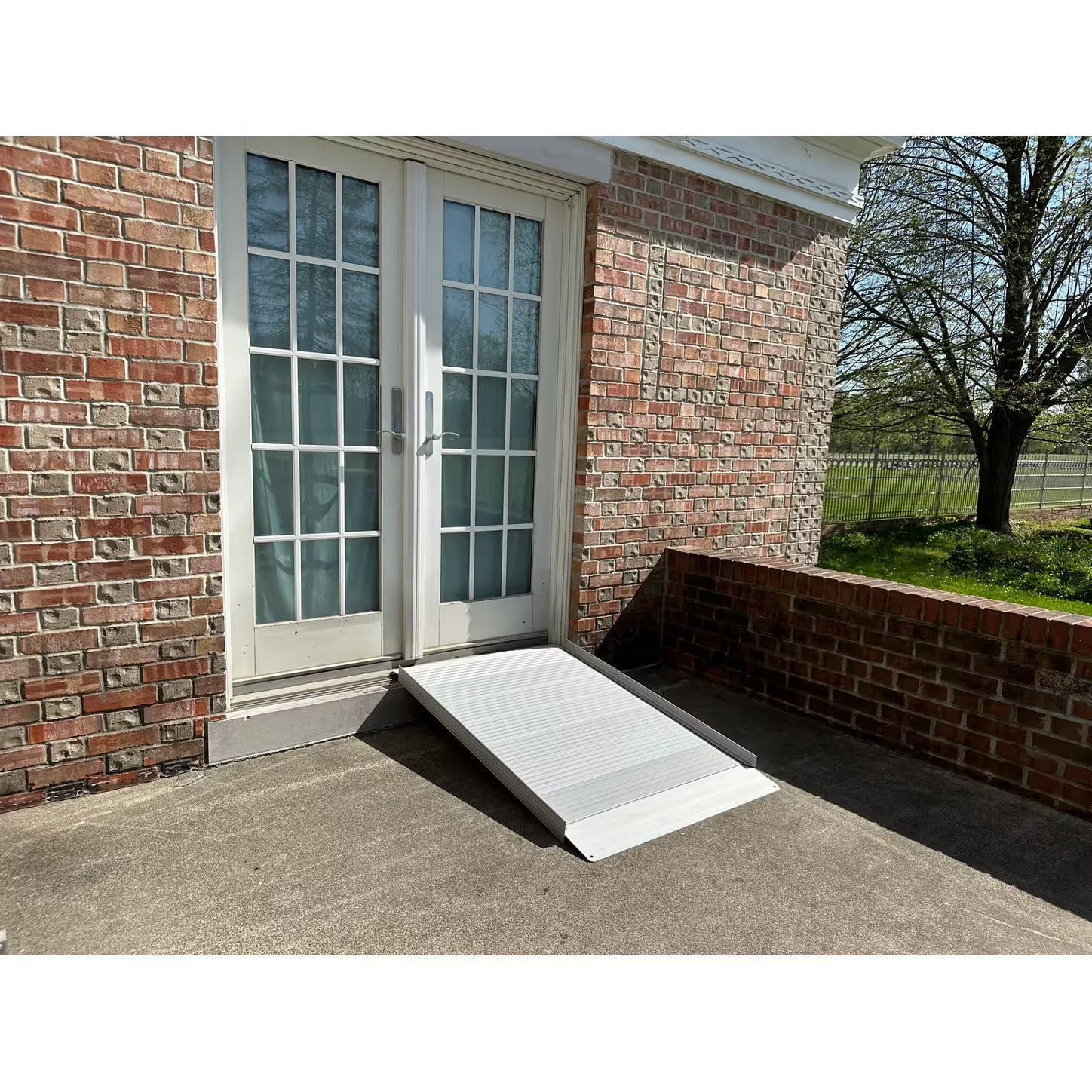
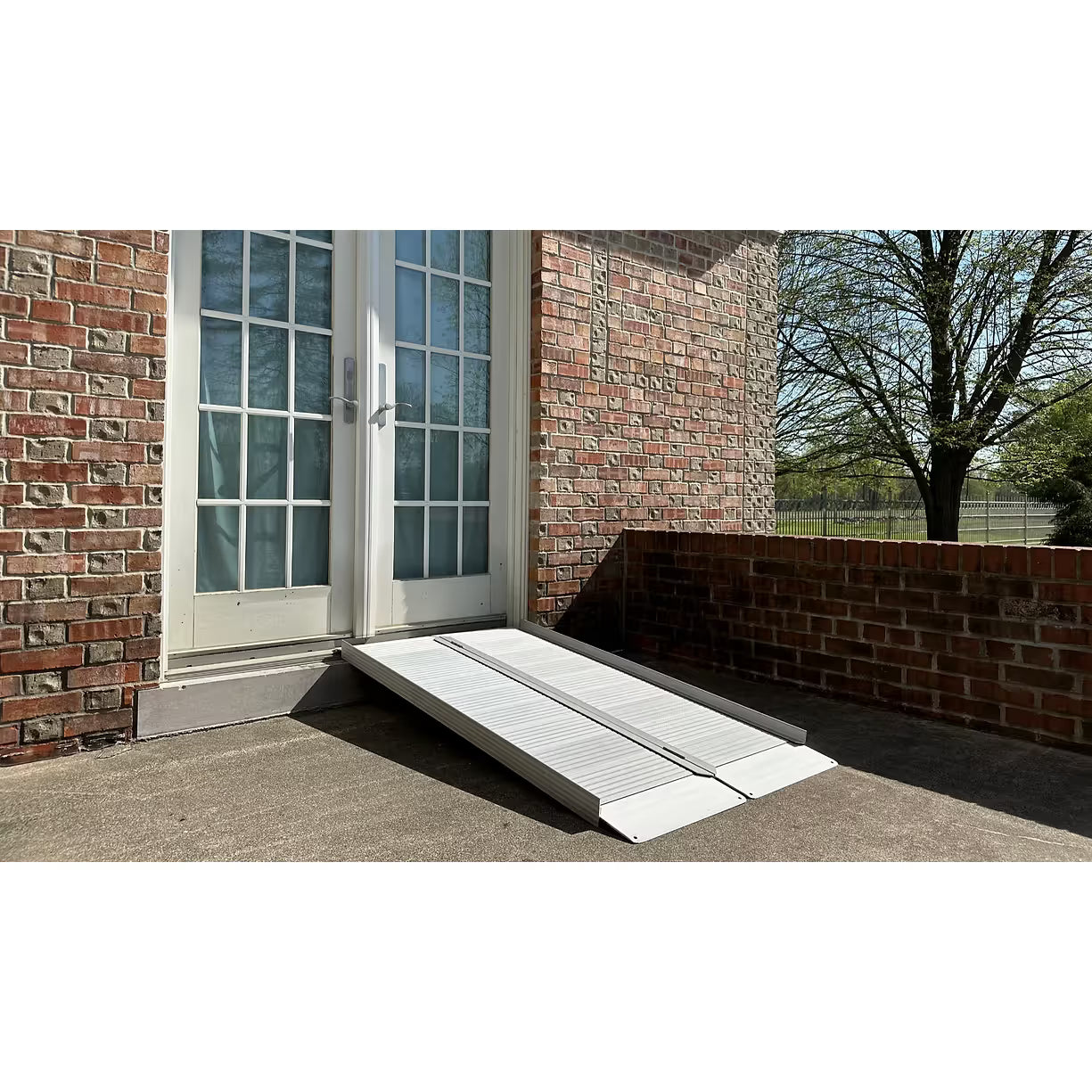
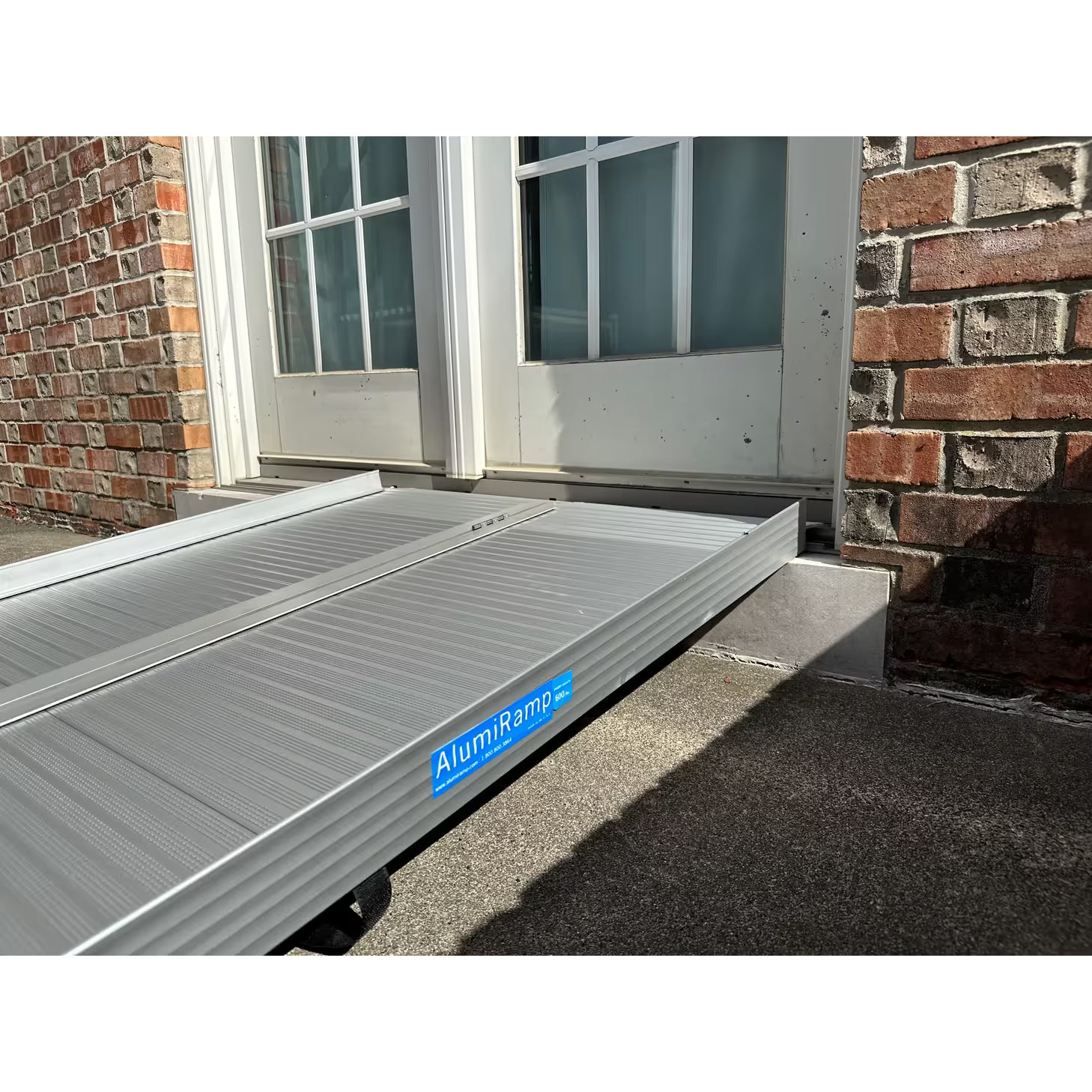
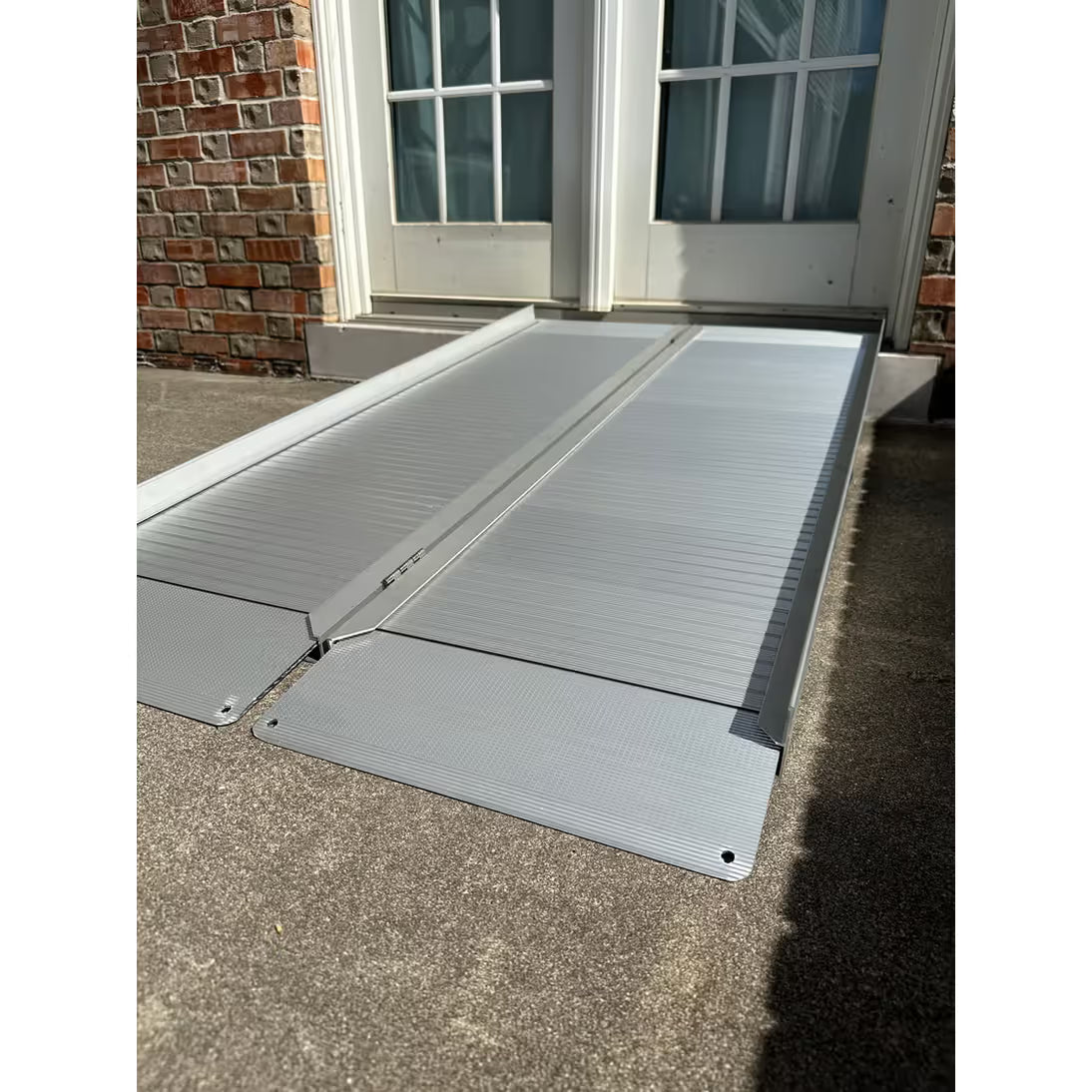
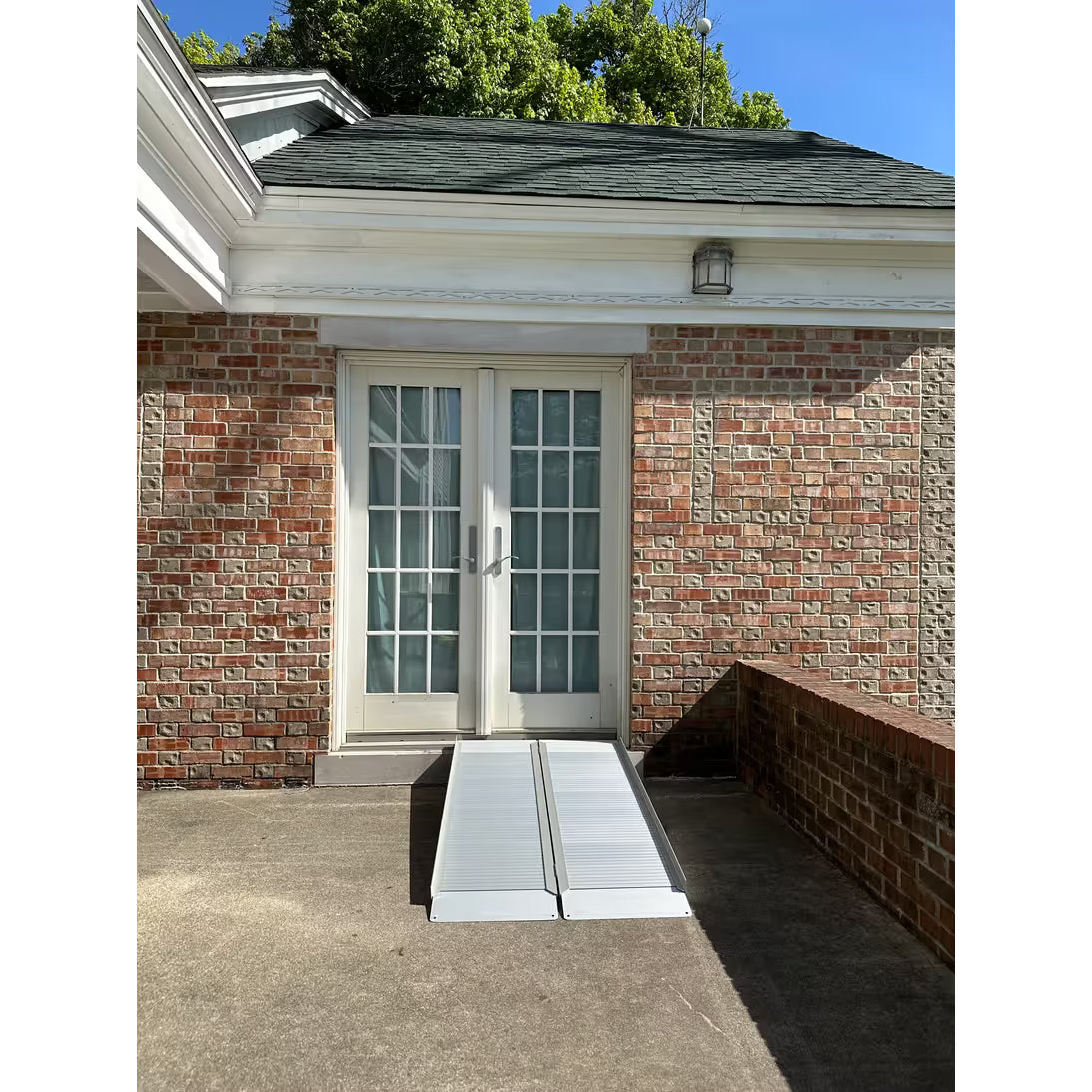
A portable wheelchair ramp is the right choice when the obstacle is a few steps, or when the obstacle is somewhere else entirely. Many families keep a folding wheelchair ramp in the car for visits to a relative's house, a church or a doctor's office that still has a step at the door. At home, the same ramp can bridge two or three steps at a back door or help load a scooter into a van.
These ramps fold in half or in quarters so they fit in a trunk, and the non-slip aluminum surface gives wheels and feet something to grip. Choosing the right length matters more than anything else here, because a ramp that is too short for the rise will be steep and tiring to climb. We cover how to work that out in the slope section below.
Our folding line comes in lengths of 2, 4, 5, 7, 8 and 10 feet, all rated for 800 pounds. The 4-foot ramp suits a single higher step, the 7-foot ramp is a common pick for a couple of steps, and the 10-foot ramp gives the gentlest slope for a scooter.
Curb Ramps
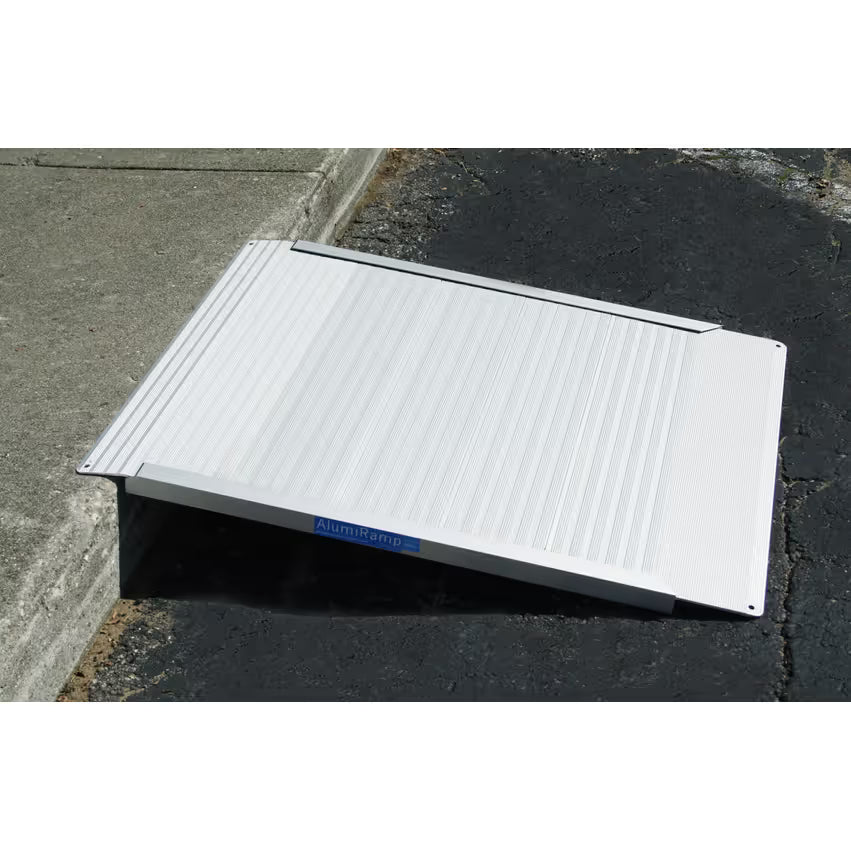
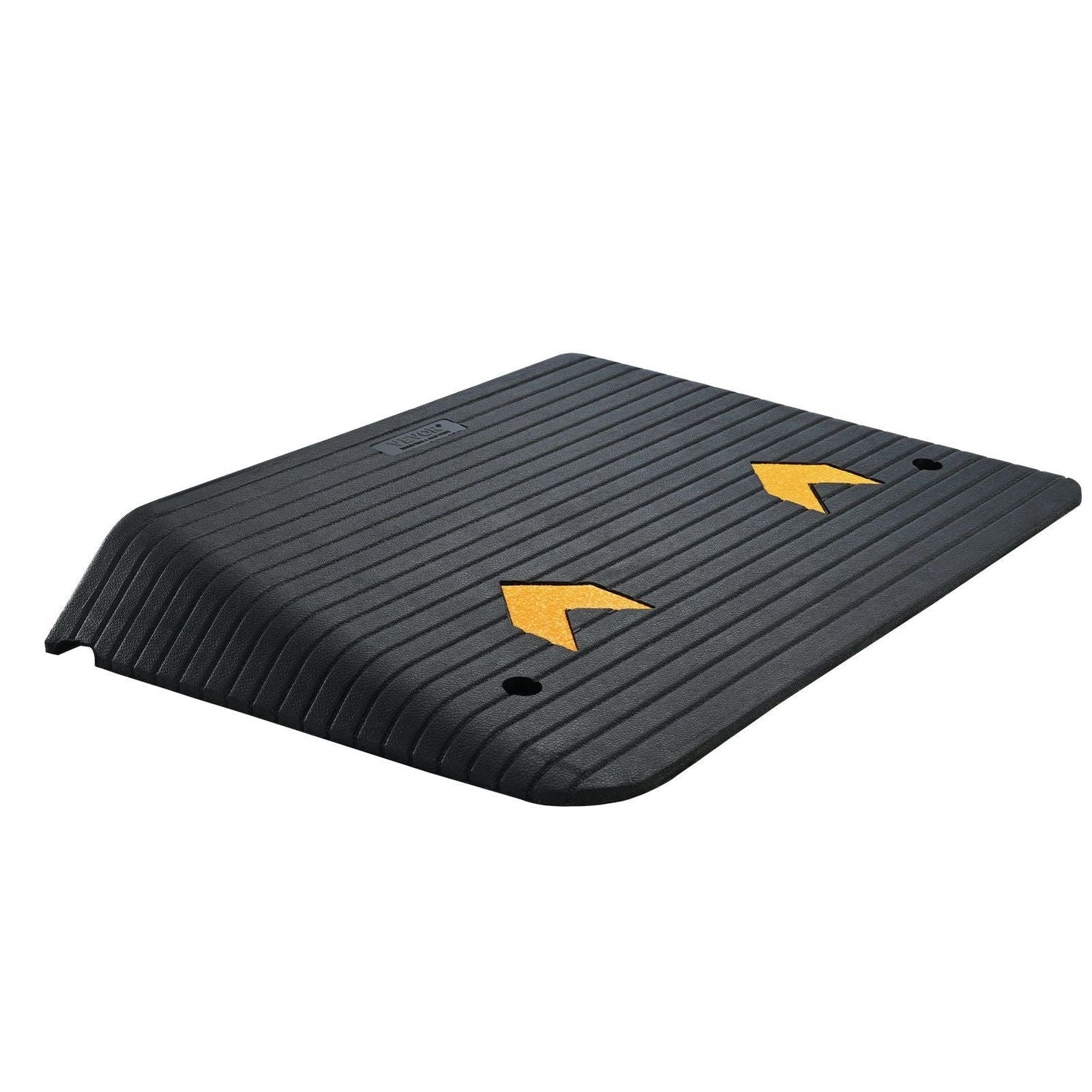
A curb ramp bridges the edge of a curb, driveway or garage floor so wheels roll over it instead of bumping into it. If your sidewalk has no curb cut, or the lip into your garage catches your scooter's front wheel, a curb ramp solves it without any construction. They are also handy for low vehicles and bikes, so the whole household benefits.
Rubber curb ramps are heavy, weather-resistant and simply sit at the curb. Aluminum curb ramps are lighter and some fold, which makes them easy to bring along or store away when you do not need them. Match the ramp's rise to the height of the curb so the top edge meets it cleanly.
Consider the Alumiramp AlumiLite HD Folding Curb Ramp, available in four lengths, or the Alumiramp AlumiLite HD Solid Curb Ramp. For a rubber option, the 2.6-inch rise rubber curb ramp fits a low curb, and the 6-inch rise rubber curb ramp two-pack handles a full-height curb.
Telescoping Ramps
A telescoping ramp is two separate channels that extend to the length you need and collapse for storage. Each channel carries one set of wheels, which is why they are popular for loading a wheelchair into a vehicle or crossing a short set of steps where a full-width ramp would be awkward. They are lighter to carry than a single-piece ramp of the same reach.
Because the two channels are independent, they take a little more care to line up with the wheelchair's wheels, and they are best suited to someone who has a helper or is confident steering onto them. For everyday home entry most people prefer a full-width ramp, but for occasional vehicle use a telescoping ramp earns its keep.
We carry the Alumiramp Telescopic Channel Ramp, and you can see the rest of the Alumiramp line in our Alumiramp collection.
Modular Wheelchair Ramps
A modular wheelchair ramp is the answer for a porch, a multi-step entry or any rise that is too tall for a portable ramp to cover safely. These systems are assembled from aluminum sections, platforms and handrails so the slope stays gentle no matter how high the entry is. They are meant for daily use, in all weather, year after year.
Modular systems are quoted to the home rather than sold off the shelf, because the right layout depends on your total rise and how much room you have in the yard. A straight run, an L-shape or a switchback with a landing are all possible, and the configuration is chosen to fit your space. As an authorized Alumiramp dealer, we can walk you through the options.
To get started, measure the total rise and the space available, then call or email with a photo of the entry for an Alumiramp configuration and quote. Reach us at support@independentlivingsuperstore.com or (844) 795-2930. You can see the AlumiRamp Quick Ramp Kits, the AlumiRamp Armada System and the AlumiRamp Industrial ACOM in our Modular Ramp Systems collection.
How Long Should a Wheelchair Ramp Be?

A wheelchair ramp should be about one foot long for every inch it has to climb. That is the commonly cited 1:12 wheelchair ramp slope guideline for unassisted wheelchair use, and it is the single most useful number to remember when you shop.
Start by measuring the rise: the vertical height from the ground to the top of the step, doorway or landing. Measure straight up, not along the steps. If you have three steps and the top one sits 21 inches above the ground, your rise is 21 inches, and the 1:12 guideline points you toward a ramp about 21 feet long. That is why a tall entry usually calls for a modular system rather than a single aluminum wheelchair ramp you carry around.
For smaller rises the math is friendlier. A back door with two steps and a 14-inch rise suggests roughly 14 feet of ramp, and a single 6-inch step suggests about 6 feet. Mobility scooters are longer than wheelchairs, so a scooter ramp benefits from a gentler slope than the guideline and a flat landing at the top where the scooter can level out before the door.
Whatever length you choose, pick a weight capacity comfortably above the combined weight of the person and the device, including any bags or accessories that ride along.
How to Choose a Wheelchair Ramp

The easiest way to choose a wheelchair ramp is to picture the exact spot that is giving you trouble. Here is how the choices usually fall out.
One lip indoors. A sliding door track or a raised doorway needs nothing more than a threshold ramp. Browse the Threshold Ramps collection and match the ramp height to the lip.
Two steps at the back door. Measure the rise and pick a portable folding ramp long enough for a comfortable slope. If a scooter will use it, go longer rather than shorter and make sure there is room at the top to level off.
Travel to a relative's house. A folding wheelchair ramp that lives in the trunk is the answer. Measure the step at their door ahead of time if you can, so the ramp you buy is long enough for the real-world rise.
A porch with five steps. This is modular territory. The rise is too tall for a portable ramp to cover safely, so a configured system with a landing and handrails is the right long-term solution.
If you are still deciding on the chair or scooter itself, our Manual Wheelchair Buying Guide, Electric Wheelchair Buying Guide and Mobility Scooter Buying Guide can help, and 7 Types of Mobility Aids That Are Ideal for Outdoor Use covers what pairs well with a ramp outside. You can compare everything side by side in our full Wheelchair Ramps collection.
HSA/FSA accepted across our catalog; see our HSA/FSA eligibility page for details. We also offer a GovX military discount, and there is no sales tax outside New York.
Important Information
This article is for general informational purposes only and is not medical advice.
Proper ramp selection depends on rise, slope and intended use. Always follow the manufacturer's specifications and use ramps on firm, level ground.






Share:
Hospital Bed Buying Guide – How to Choose the Right Bed for Home Care
Rollator, Walker & Cane Buying Guide – How to Choose the Right Walking Aid